In the lush, vibrant landscapes of South Florida, from Palm Beach County to Fort Lauderdale, trees are not just scenery; they are foundational assets to our properties. They provide shade, enhance value, and define the unique character of our communities. However, like any valuable asset, they require expert care to thrive. Pruning, when done correctly, is one of the most beneficial practices for a tree’s health and longevity. When done incorrectly, it can cause irreparable harm.
Professional tree pruning, when done correctly, is one of the most beneficial practices for a tree’s health and longevity. When done incorrectly, it can cause irreparable harm.
Many property owners see pruning as simply cutting back overgrown branches. In reality, it is a precise science and a refined art. Every cut has the potential to influence a tree’s growth pattern, affect its structural integrity, and determine how well it withstands the powerful storms common in South Florida. That’s why working with an ISA (International Society of Arboriculture) Certified Arborist — and documenting recommendations in a professional arborist report — is not a luxury, but an essential part of responsible tree stewardship.
With a career rooted in the science of horticulture since 1984, Arborist Consulting Solutions brings a deep understanding of South Florida’s unique ecosystems. Proper pruning is more than routine maintenance; it is a proactive investment in your tree’s long-term health, safety, and beauty, helping ensure it remains a strong and valuable part of your landscape for decades to come.
The Science Behind a Professional Cut
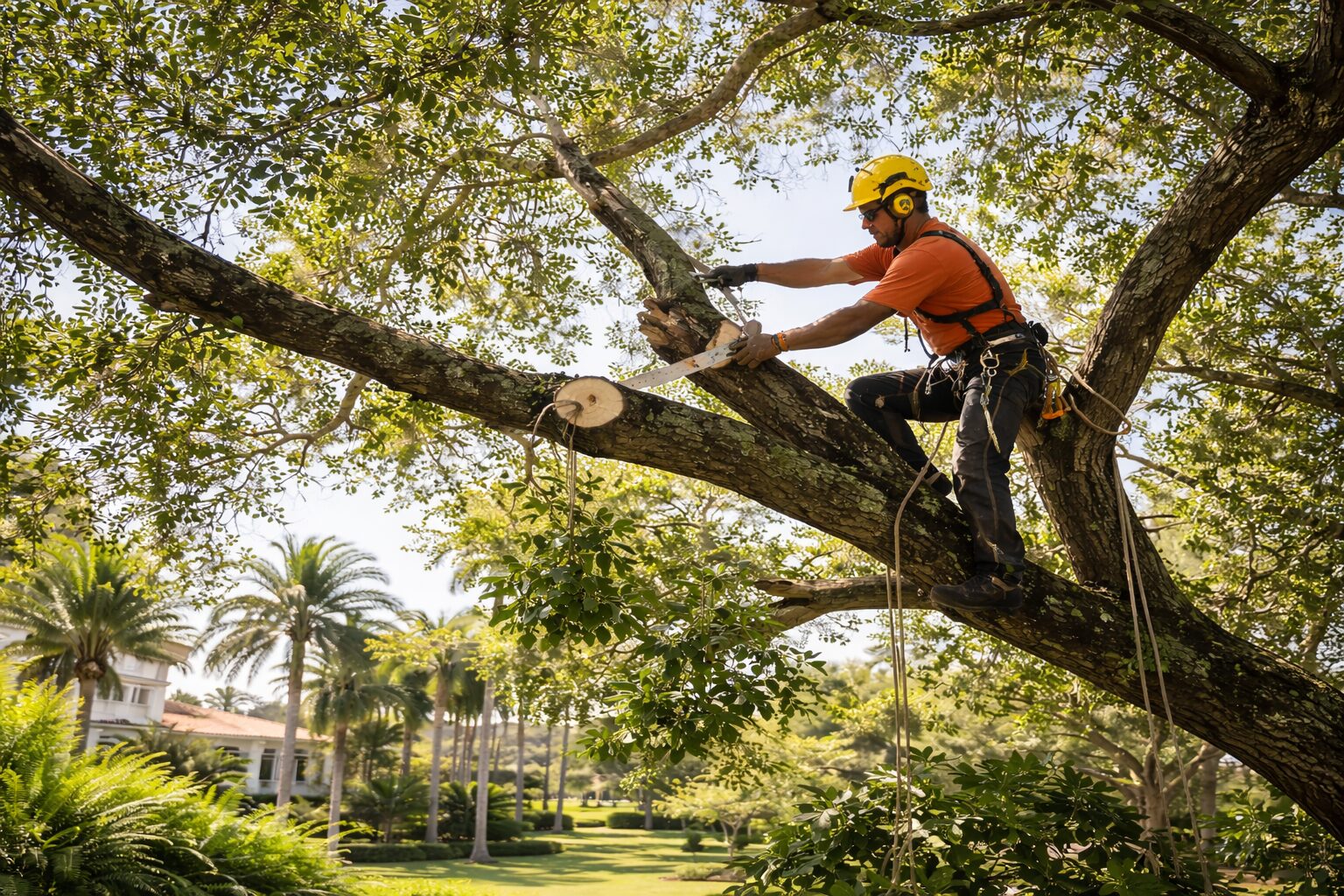
Why is professional tree pruning so critical? It goes far beyond aesthetics. An arborist’s approach to tree pruning is based on biology, understanding how a tree will respond to each removal. The primary goals of structural tree pruning are to promote health, safety, and a strong framework.
Improper techniques, such as “topping” or “hat-racking,” are incredibly damaging. These methods involve indiscriminately cutting the top of a tree’s canopy, leaving large, open wounds and stubs. This practice weakens the tree, invites pests and disease, and encourages the growth of weak, poorly attached sprouts that are highly susceptible to breaking during a storm. An ISA Certified Arborist will never recommend topping a tree.
Instead, professional tree pruning focuses on making precise, intentional cuts that respect the tree’s natural form and healing processes. This includes:
- Removing Deadwood: Eliminating dead, dying, or diseased branches prevents decay from spreading to healthy parts of the tree and removes potential falling hazards.
- Improving Structure: Correcting co-dominant stems, crossing branches, and other structural defects early in a tree’s life prevents major failures later on.
- Enhancing Airflow and Light: Selectively thinning the canopy increases air circulation and sunlight penetration, which can reduce the risk of certain fungal diseases and promote a healthier interior canopy.
- Managing Risk: Identifying and pruning branches that pose a risk to people or property is a key component of responsible tree management, especially in our densely populated communities.
Common Pruning Techniques for South Florida Trees
An ISA Certified Arborist will develop a specific pruning plan based on the tree’s species, age, condition, and location. This plan will utilize established techniques to achieve the desired objectives.
Crown Cleaning
Crown cleaning is a foundational component of professional tree pruning. It involves removing dead, diseased, broken, and weakly attached branches from the canopy. This improves tree health and significantly reduces liability risks.
Crown Thinning
In South Florida, crown thinning is particularly important for hurricane preparedness. This technique involves the selective removal of small, live branches to reduce the overall density of the canopy. By allowing wind to pass more easily through the tree, crown thinning reduces the “sail effect” that can cause uprooted trees or catastrophic branch failure during a major storm. It’s a strategic process that must be done carefully to avoid removing too much of the tree’s energy-producing foliage.
Crown Raising
Crown raising provides vertical clearance for pedestrians, vehicles, driveways, and buildings. In urban environments like Fort Lauderdale and Palm Beach County, professional tree pruning ensures clearance needs are met without compromising structural stability.
Crown Reduction
Often confused with topping, crown reduction is an advanced professional tree pruning technique. It reduces height or spread by cutting back to lateral branches capable of sustaining growth. This maintains natural form while relieving structural stress or creating clearance from utilities.
Why Your Property Needs an ISA Certified Arborist
An ISA Certified Arborist is a professional with a verified level of knowledge and experience in tree care. To become certified, an individual must pass a comprehensive examination and adhere to a strict code of ethics. This certification is a testament to their commitment to the health of trees and the safety of the public.
At Arborist Consulting Solutions, Ron’s lifetime of South Florida experience provides practical insight that goes beyond textbook theory. He develops multi-year professional tree pruning plans and prepares detailed Tree Pruning Analysis Reports, ensuring transparency and long-term strategy.
Arborist Consulting Solutions specifies and documents tree work. The cutting itself is carried out by a licensed tree crew working to the prescription in the report.
This expertise is also critical when navigating local regulations. Many municipalities in Palm Beach County have specific ordinances regarding tree pruning and removal, especially concerning Champion & Heritage Trees. Attempting to perform work without the proper permits can lead to significant Violations & Compliance issues and hefty fines. An experienced consulting arborist can produce the necessary Arborist Report and help you navigate the Permitting process smoothly.
A Holistic Approach to Tree Management
Pruning is just one piece of the puzzle. A truly healthy landscape requires a comprehensive management strategy. A consultation might reveal that the root cause of a tree’s decline isn’t a lack of pruning, but an issue hidden below the surface.
Our services extend to a full spectrum of arboricultural diagnostics and documentation, including:
- Certified Tree Surveys & Tree Inventories: Creating a detailed map and health assessment of all trees on your property, essential for large estates, commercial properties, and community associations.
- Soil Analysis: Testing the soil to identify nutrient deficiencies or compaction issues that may be stressing your trees.
- Tree Risk Reports: A formal assessment that identifies potential hazards and provides recommendations for mitigation, which can be crucial for liability and insurance purposes.
- Tree & Landscape Site Plan Review: Working with developers and builders to ensure that construction activities do not negatively impact existing valuable trees.
- Expert Witness Services: Providing professional, unbiased testimony in legal disputes involving trees, from property line disagreements to insurance claims.
A proactive professional tree pruning strategy protects property value, reduces liability, and strengthens long-term landscape sustainability.
Every tree tells a story. Whether you are recovering from storm damage, planning a new development, or simply want to ensure the long-term health of your green assets, professional guidance is key. A proactive approach to tree management, starting with proper pruning, protects your investment and preserves the natural beauty of our South Florida environment.
If you have concerns about the health of your trees or need guidance on proper pruning practices in Palm Beach County or the surrounding areas, understanding the intricate needs of your landscape is the first step. For a professional consultation and an Arborist Report of your property’s trees, call Arborist Consulting Solutions.
Contact us today at 728-212-8891 or [email protected], or visit our contact page to learn more.
Frequently Asked Questions
1. When is the best time to prune trees in South Florida?
While minor pruning of dead or hazardous branches can be done at any time, the best time for major structural pruning on most species is during the dormant season (late fall to early spring). However, certain species, like palms, have specific pruning needs and windows. A certified arborist can provide an arborist report and the best recommendation for your specific trees.
2. What is the difference between pruning and “tree topping”?
Pruning involves making selective, strategic cuts to enhance a tree’s health and structure while respecting its natural form. Tree topping is an outdated and harmful practice of indiscriminately cutting the top of a tree, leading to weak growth, decay, and a significantly shorter lifespan.
3. How can I tell if my tree needs professional pruning?
Signs that your tree may need attention include numerous dead or broken branches, branches that are crossing or rubbing against each other, an overly dense canopy, or low-hanging limbs that obstruct walkways or views. If you notice large cracks or cavities in the trunk or major limbs, you should call a consulting arborist immediately for a risk assessment.
4. Why might I need a permit to prune a tree on my own property?
Many municipalities in South Florida have tree protection ordinances to preserve the local canopy. Permits may be required for significant pruning or removal, especially for large, historic, or specific native species. An arborist can help you determine if a permit is needed and assist with the application process to ensure you remain in compliance with local laws.