Arborist Consulting Solutions
Florida Tree Law: Regulations & Compliance in South Florida
FLORIDA TREE DISPUTES GUIDANCE ASSISTANCE AND FORENSIC INVESTIGATIONS
Arboricultural Consulting | Forensic Investigations | Technical Evaluation
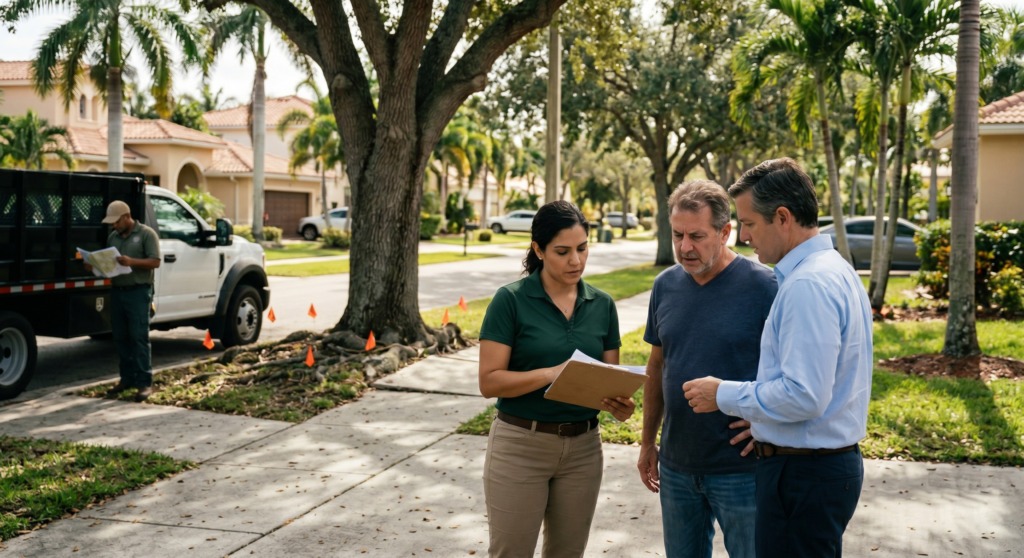
Arborist Consulting Solutions provides professional arboricultural consulting services for complex tree-related disputes throughout Florida. These matters often involve tree biology, property conditions, municipal regulations, construction impacts, insurance claims, HOA issues, preservation requirements, appraisal considerations, and accepted arboricultural practices. Tree-related disputes frequently require technical evaluation based on field observation, scientific principles, and accepted arboricultural standards rather than general opinion or visual assumptions. For decades, Arborist Consulting Solutions has assisted clients and attorneys throughout Florida in understanding and evaluating complex tree-related matters through objective arboricultural analysis and forensic investigation.
IMPORTANT NOTICE

Arborist Consulting Solutions is not a law firm and does not provide legal advice, legal opinions, legal representation, or interpretations of law. Ron provides arboricultural consulting services only, including evaluations, forensic investigations, reports, risk assessments, appraisals, and expert opinions.
NATURE OF FLORIDA TREE DISPUTES

Tree-related disputes in Florida often involve overlapping issues including property rights, municipal regulations, construction activity, environmental conditions, and biological tree responses. These matters commonly require evaluation of tree health, structural stability, root conditions, soil conditions, site constraints, and external impacts such as development activity or mechanical disturbance. Proper evaluation typically requires technical arboricultural analysis and application of accepted industry standards.
EXPERIENCE WITH FLORIDA TREE DISPUTES
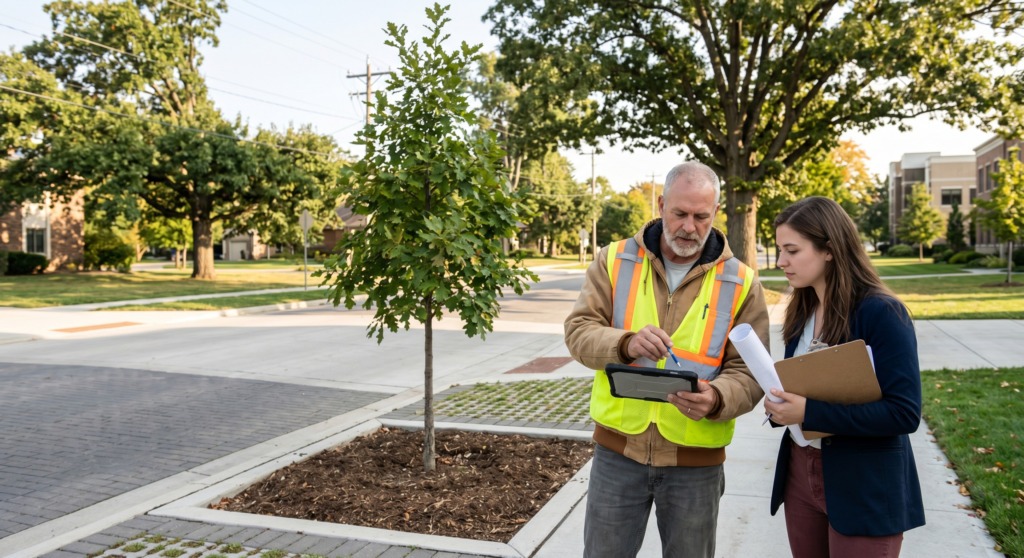
For decades, Arborist Consulting Solutions has assisted clients and attorneys throughout Florida with a wide range of arboricultural matters including property damage claims, construction impacts to trees, wrongful tree removal, municipal code compliance issues, permit disputes, code enforcement actions, HOA tree disputes, insurance claims, utility conflicts, herbicide and chemical damage, tree valuation matters, and expert witness support.
MUNICIPAL TREE CODES PERMITTING AND ENFORCEMENT ISSUES

Many tree disputes involve municipal ordinances, permitting requirements, preservation standards, and code enforcement actions including tree removal permits, permit denials, notices of violation, municipal fines, protected tree regulations, heritage tree requirements, mitigation obligations, tree protection plans, construction compliance issues, and site plan review requirements. Municipal requirements vary significantly throughout Florida and often require technical arboricultural evaluation to determine compliance and impact.
FLORIDA STATUTES AND TREE REGULATIONS
Tree-related matters may involve Florida statutes and municipal ordinances. Arborist Consulting Solutions does not provide legal advice but assists with arboricultural interpretation and technical evaluation. Florida Statute 163.045 addresses residential tree pruning, trimming, and removal under qualifying conditions subject to statutory requirements and local ordinances. The Florida Mangrove Trimming and Preservation Act (403.9321–403.9333) regulates mangrove trimming, preservation, and permitting under Florida law. Municipal tree ordinances regulate tree removal, preservation requirements, mitigation standards, development impacts, and tree protection requirements. These vary by jurisdiction and require site-specific evaluation.
ARBORICULTURAL FORENSIC INVESTIGATIONS

Forensic arboricultural investigations evaluate what happened, why it happened, whether damage exists, cause of damage, extent of damage, contributing factors, long-term impacts, and applicable arboricultural standards. Methods include site inspections, photographic documentation, records review, root evaluation, soil assessment, construction impact analysis, tree failure analysis, chemical damage evaluation, and standards of care review.
COMMON FLORIDA TREE DISPUTES

Common disputes include neighbor tree issues, root encroachment claims, construction-related tree damage, wrongful tree removal, HOA disputes, municipal permitting issues, code enforcement matters, insurance claims, and herbicide or chemical damage cases.
SERVICES PROVIDED
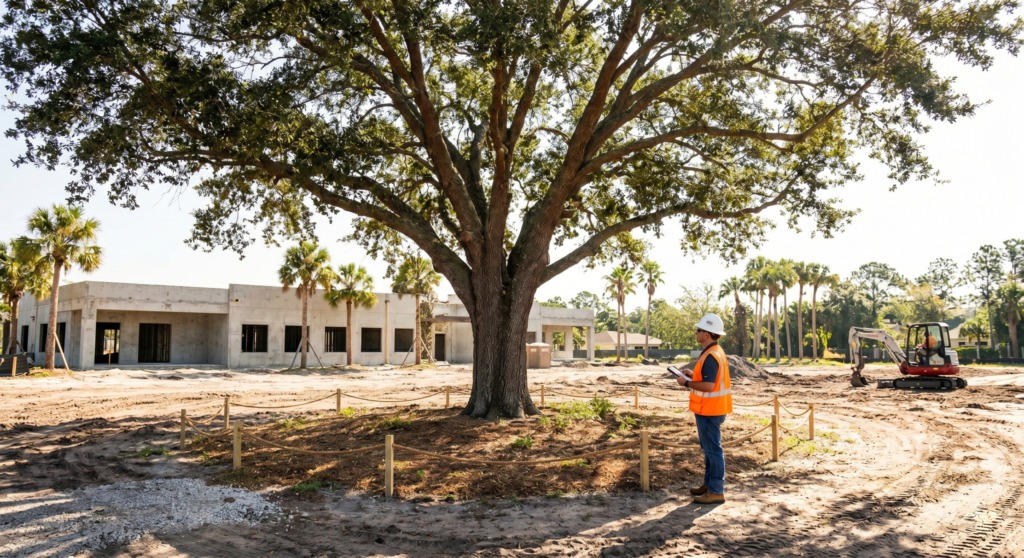
Tree evaluations, risk assessments, tree appraisals, damage assessments, forensic investigations, construction impact analysis, municipal code support in an arboricultural context, insurance claim support, expert witness services, technical consulting, and independent professional opinions.
WHY CLIENTS CONTACT US
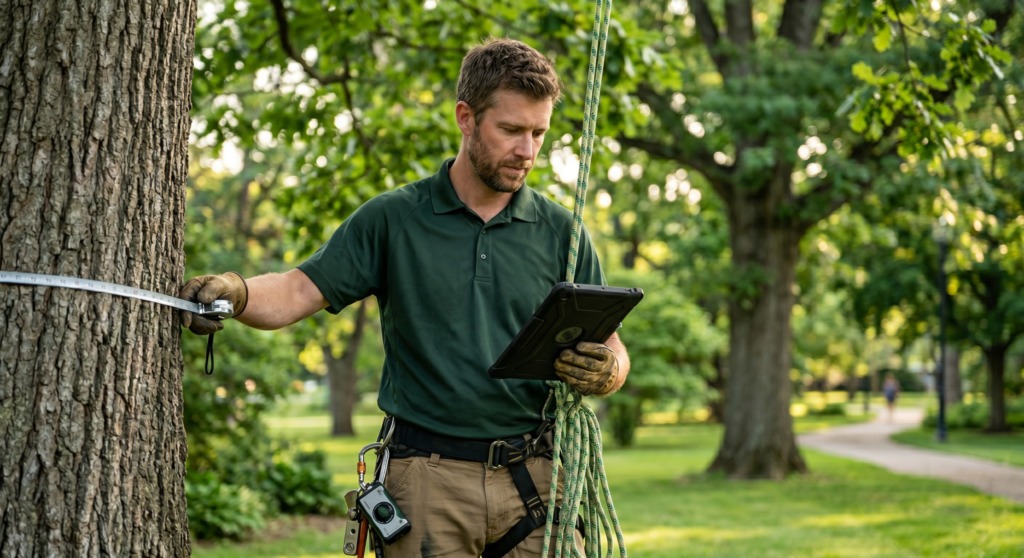
Clients and attorneys typically seek clarity on what happened, why it happened, whether damage exists, severity, applicable standards, and available options. Ron provides objective arboricultural analysis to help answer these questions clearly and professionally.
PROFESSIONAL POSITION STATEMENT

Ron provides forensic arboricultural consulting services to assist clients and attorneys in understanding complex tree-related disputes. His work is based on accepted arboricultural science, industry standards, and decades of field experience in Florida. Ron does not provide legal advice. His role is limited to arboricultural evaluation, investigation, reporting, and professional opinion.
FAQs
Florida Statute 163.045 is the law most people mean when they search for the Florida tree law. It prevents local governments from requiring a notice, application, permit, fee, or mitigation when a homeowner prunes, trims, or removes a tree on single family residential property, as long as the owner has documentation from an ISA Certified Arborist or a Florida licensed landscape architect stating the tree presents an unacceptable risk. The assessment must follow the ISA Tree Risk Assessment Best Management Practices. Outside of that exemption, your city or county tree ordinance still controls what you can remove and what permits you need.
Yes, several. Mangroves are protected statewide under the Mangrove Trimming and Preservation Act and cannot be removed without authorization. Many municipalities also designate protected, specimen, or heritage trees, often based on species and trunk diameter, and removing one without a permit can carry significant fines. Trees on state land, in conservation easements, or in protected wetlands are also off limits regardless of who is holding the chainsaw.
Not without going through the process. Miami-Dade County requires a tree removal permit for most canopy trees, and mahogany is a protected native canopy species. The exception is if the tree sits on single family residential property and an ISA Certified Arborist documents that it presents an unacceptable risk under Florida Statute 163.045. In that case the documentation takes the place of a permit. If the tree is simply inconvenient or dropping seed pods, expect to apply for a permit and possibly replace the canopy you remove.
If the tree was protected by a local ordinance and you did not qualify for the state law exemption, you can face code enforcement action, fines, and mandatory mitigation. Many counties calculate fines per tree or per inch of trunk diameter, and some require you to replant or pay into a tree fund on top of the fine. The amounts vary widely by jurisdiction, which is why Ron always recommends getting a documented risk assessment before removal rather than asking for forgiveness after.
There is no single statewide replacement law. Replacement, often called mitigation, is set by local ordinance. Most Florida cities and counties require you to replace removed canopy with new trees of a certain size, or pay into a tree trust fund, when a permit is issued. The important exception is Statute 163.045. If a tree on single family residential property is documented as an unacceptable risk by a certified arborist, the local government cannot require you to replant it.
It depends on how the removal happens. If an ISA Certified Arborist performs a risk assessment and documents that the diseased tree presents an unacceptable risk, Statute 163.045 applies and the county or municipality cannot require replacement on single family residential property. If you go the permit route instead, or the property is commercial or multifamily, local mitigation rules apply and replacement trees are commonly required. This is exactly the situation where a proper arborist report saves homeowners real money.
No. Trees on state owned land, including state parks, road rights of way, and conservation areas, belong to the state. Cutting or damaging them can result in civil penalties and in some cases criminal charges. The same goes for planting. You cannot plant palms or any other trees on state park land without authorization from the managing agency. If a tree on public land threatens your property, report it to the agency that manages the land rather than touching it yourself.
The tree belongs to whoever owns the land the trunk grows on. Your neighbor cannot force you to remove a healthy tree and cannot remove it themselves. Under Florida law, a neighbor may trim branches and roots that cross onto their side of the property line, at their own expense, but only up to the line and not in a way that harms the health of the tree. If your neighbor is pressuring you or threatening removal, a documented tree risk assessment establishes the tree’s condition on the record and is often the strongest tool you have to protect it.
No. Pruning your own trees away from your roof is legal and frankly a good idea in a hurricane state. Statute 163.045 covers pruning and trimming the same way it covers removal, so on single family residential property a local government cannot require a permit or fee for that work when it is tied to documented risk. The one caution is severe pruning. Hat racking or topping a protected tree can violate local ordinances and damage the tree, so significant canopy reduction should be done to industry standards.
Preemption means state law overrides local rules. Statute 163.045 preempts local tree ordinances in one specific situation: single family residential property where a certified arborist or licensed landscape architect has documented that a tree presents an unacceptable risk. In that lane, the local government cannot require permits, fees, notice, or replacement. Everywhere else, including commercial property, multifamily property, and healthy trees, local ordinances remain fully in effect. The law was passed in 2019 and tightened in 2022 to define what qualifies as proper documentation.
Street trees generally sit in the public right of way and are governed by your city or county, not by the state preemption law. Statute 163.045 applies only to trees on single family residential property, and a right of way strip does not qualify even when you mow it. If a street tree is lifting your sidewalk or threatening your home, the correct path is a request to your municipality, ideally supported by an arborist report documenting the condition.
Cities like Deerfield Beach and many others across South Florida require a report from a certified arborist as part of the tree removal permit process. The report verifies the species, size, condition, and location of the tree so the city can determine whether removal is justified and what mitigation applies. It also protects you. A properly documented assessment is the difference between an approved permit and a denial, and in risk cases it can remove the permit requirement entirely under state law.
A tree risk assessment is a systematic evaluation of a tree’s likelihood of failure and the consequences if it fails, performed to the ISA Tree Risk Assessment Qualification (TRAQ) standard. The assessor examines structure, root condition, decay, lean, canopy health, and targets such as homes, driveways, and play areas, then assigns a risk rating. In Florida this document carries legal weight. A finding of unacceptable risk by an ISA Certified Arborist is what triggers your rights under Statute 163.045.
Yes. A pruning specification report documents what work a tree needs, to what standard, and why. It is commonly used to direct tree crews, satisfy HOA or municipal requirements, support insurance claims, and create a defensible record that work was performed to ANSI A300 standards. If you are pruning near a roof line, over a neighbor’s property, or on a protected species, a written specification protects you before the first cut is made.
Many Florida municipalities limit how much of your required tree canopy can be met with palms, since palms provide far less shade than hardwood canopy trees. A common approach is counting multiple palms as the equivalent of one canopy tree or capping palms at a percentage of required plantings. These ratios vary by city, so check your local landscape code before designing around palms or replacing a removed hardwood with them.
When mitigation is required, most Florida codes call for replacement with native or noninvasive canopy species from an approved list, planted at a minimum height or trunk caliper. Live oak, mahogany, gumbo limbo, and bald cypress are common approved choices in South Florida. Some ornamentals and exotics, including certain poinciana plantings, may not satisfy canopy credit in every jurisdiction. The right answer depends on your local approved species list, which Ron can review as part of any removal or mitigation plan.
Not inherently. Healthy, well structured trees planted at appropriate distances add value, shade, and energy savings, and species like live oak have excellent wind resistance records in hurricanes. Problems come from the wrong tree in the wrong place: brittle species, poor structure, decay, or root systems too close to foundations and pipes. Whether it is a pine in the front yard or an oak over the roof, there is no rule against it. The question is condition and risk, and that is exactly what a professional assessment answers.