Arborist Consulting Solutions
ROOT DAMAGE INVESTIGATIONS, PUBLIC SAFETY, INFRASTRUCTURE CONFLICTS & EXPERT WITNESS SERVICES
Sidewalk Uplift • Trip Hazards • Foundation Damage • Sewer Intrusion • Utility Conflicts • Forensic
Arboriculture • Litigation Support
OVERVIEW

Tree roots are frequently alleged to be responsible for damage involving sidewalks, curbs, foundations, retaining walls, parking lots, utilities, drainage systems, sewer systems, water lines, and other infrastructure. Determining whether roots contributed to the observed condition requires a comprehensive evaluation of root biology, soil conditions, infrastructure design, construction practices, utility conditions, drainage patterns, and site history. Arborist Consulting Solutions provides independent investigations, forensic arboricultural evaluations, infrastructure assessments, causation analysis, and expert witness services involving root-related property damage and infrastructure conflicts.
Common Matters Evaluated

Public Safety
Sidewalk uplift, trip hazards, ADA accessibility concerns, curb damage, pathway conflicts, bicycle path conflicts, and pedestrian exposure.
Property Damage
Foundation damage claims, retaining wall conflicts, slab movement, pool damage, patio displacement, fence movement, and hardscape concerns.
Utility Conflicts
Sewer line intrusion, water utility conflicts, gas utility conflicts, electric utility conflicts, drainage systems, telecommunications, and fiber optic conflicts.
Why Root Conflicts Occur

Most root-related conflicts are not caused by a defective tree. They are often the result of limited soil volume, improper species selection, inadequate setbacks, parking island design limitations, utility placement conflicts, drainage modifications, soil compaction, construction impacts, or long-term infrastructure planning decisions.
Understanding why the conflict developed is often critical to determining responsibility and selecting appropriate mitigation measures.
Public Safety, Liability & Risk Management

One of the most important aspects of root-related infrastructure conflicts is the potential creation of public safety hazards. Sidewalk uplift, uneven walking surfaces, ADA accessibility concerns, bicycle path hazards, damaged curbs, and pathway conflicts may increase liability exposure.
Municipalities, HOAs, schools, hospitals, commercial property owners, and property managers frequently seek proactive evaluations to reduce risk and improve public safety.
Sidewalk Uplift & Trip Hazard Investigations

Investigations frequently involve raised concrete panels, differential settlement, cracked sidewalks, pathway hazards, crosswalk deficiencies, parking lot pedestrian conflicts, and accessibility concerns. Evaluations consider both root activity and other contributing factors including construction quality, drainage deficiencies, utility trenching, soil movement, settlement, and infrastructure age.
Foundation, Structural & Building Damage Investigations

Tree roots are often alleged to contribute to foundation cracking, slab movement, patio displacement, retaining wall failures, swimming pool damage, fence movement, and structural conflicts. Evaluations may include review of soil conditions, utility leaks, drainage patterns, construction methods, settlement indicators, root architecture, species characteristics, and historical site modifications.
Important causation note: The presence of roots near a structure does not automatically establish causation.
Underground Utility & Root Intrusion Investigations

Root systems and utilities often occupy the same limited soil environment. Evaluations may involve municipal water mains, domestic service lines, sewer systems, sewer laterals, septic systems, stormwater infrastructure, gas utilities, underground electrical systems, irrigation systems, telecommunications systems, and fiber optic networks.
Root intrusion investigations frequently require analysis of utility condition, age, defects, maintenance history, and root growth patterns.
Root System Biology & Growth Characteristics

Roots generally grow toward favorable environments that provide oxygen, moisture, nutrients, and available soil volume. Understanding structural roots, lateral roots, absorbing roots, sinker roots, buttress roots, and root flare systems is often essential when evaluating infrastructure conflicts.
Root growth responses may be influenced by irrigation, drainage systems, utility corridors, disturbed soils, and site modifications.
Root Systems & Causation Analysis

The presence of roots near damaged infrastructure does not automatically establish that roots caused the damage. Potential contributing factors may include utility defects, settlement, soil movement, drainage deficiencies, material deterioration, construction practices, environmental influences, historical site conditions, and previous repairs.
Each matter should be evaluated independently using available evidence and accepted investigative methodologies.
Forensic Arboriculture Methodology

Investigations may include site inspections, root tracing, root exposure and examination, species identification, utility conflict assessments, historical aerial imagery review, engineering document review, construction record review, photographic documentation, maintenance history review, and causation analysis.
The objective is to develop a defensible, evidence-based opinion supported by observations and available documentation.
Proactive Planning, Tree Selection & Damage Prevention
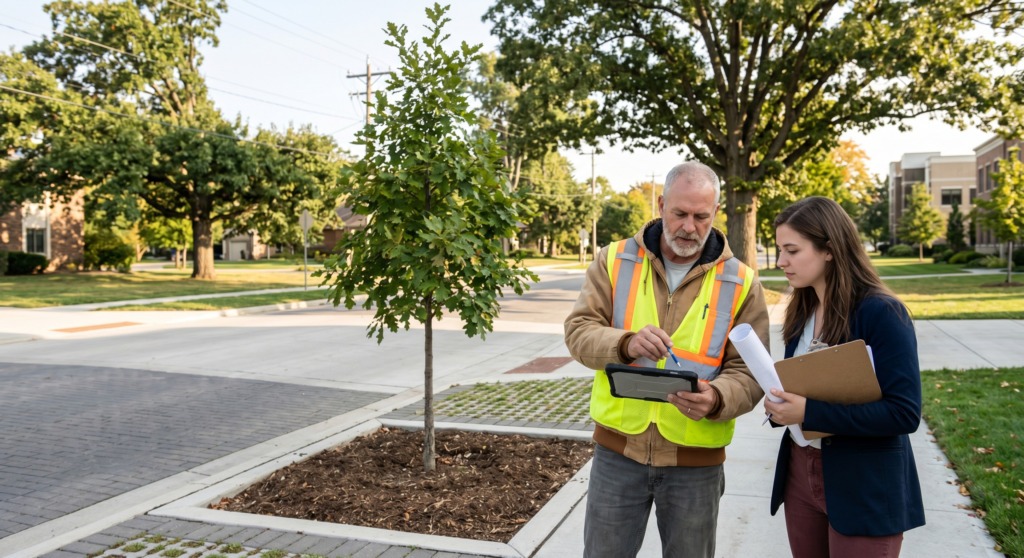
Many root-related conflicts can be prevented before damage develops. Arborist Consulting Solutions provides recommendations regarding species selection, planting locations, utility corridor planning, setback distances, root space requirements, infrastructure compatibility, sidewalk conflict forecasting, and long-term tree management.
Proper planning can significantly reduce future maintenance costs, infrastructure conflicts, and liability exposure.
Tree Growth Regulators & Infrastructure Management

In certain situations, Tree Growth Regulators may be considered as part of a broader infrastructure management strategy. Potential applications may include growth rate management, utility corridor management, reduced pruning frequency, root-to-shoot balance considerations, infrastructure conflict mitigation, and long-term tree preservation.
Recommendations are based on site conditions, species characteristics, management objectives, and overall compatibility with surrounding infrastructure.
Infrastructure Conflict Prevention Program

Arborist Consulting Solutions can assist municipalities, HOAs, condominium associations, schools, universities, hospitals, developers, and commercial property owners with infrastructure conflict prevention programs.
- Tree inventories
- Utility corridor assessments
- ADA pathway evaluations
- Sidewalk conflict forecasting
- Species suitability reviews
- Risk management planning
- Capital improvement planning
- Long-term asset management strategies
Expert Witness & Litigation Support

Expert witness services may include case review, site inspections, forensic investigations, causation analysis, expert reports, rebuttal reports, mediation support, deposition testimony, trial testimony, and standards-of-care evaluations.
Representative matters may involve trip-and-fall claims, foundation disputes, utility conflicts, municipal claims, HOA disputes, construction litigation, insurance claims, and property damage matters involving trees and root systems.
Frequently Asked Questions

Tree roots may be one factor considered during a foundation damage evaluation, but roots alone do not automatically establish causation. Soil conditions, drainage, settlement, construction methods, utility leaks, and historical site conditions should also be evaluated.
Roots may enter utilities through existing defects, cracks, failed joints, or deteriorated materials. A proper evaluation considers both root activity and the condition, age, design, and maintenance history of the utility system.
Sidewalk uplift may involve root activity, soil movement, drainage deficiencies, poor construction practices, utility trenching, settlement, infrastructure age, or a combination of factors.
In some circumstances, Tree Growth Regulators may be part of a broader management strategy. Recommendations depend on tree species, site conditions, infrastructure location, management objectives, and long-term preservation goals.
Yes. Arborist Consulting Solutions provides forensic arboriculture evaluations, expert reports, litigation support, deposition testimony, trial testimony, and causation analysis involving root damage, infrastructure conflicts, and tree-related property damage claims.