Florida Boundary Tree and Florida Tree Law Assistance
Website-ready authority page for boundary tree disputes, Florida tree law, overhanging branches, encroaching roots, residential tree removal questions, Florida Statute 163.045, HOA/COA issues, and consulting arborist expert support.
Page Overview
This page is designed to help Florida property owners, attorneys, HOAs, COAs, property managers, municipalities, insurance professionals, and real estate professionals understand the most common tree law questions involving property line trees, boundary trees, hazardous trees, overhanging branches, encroaching roots, and private residential tree removal.
Recommended Table of Contents
- What is a boundary tree in Florida?
- Florida boundary tree law and common-law principles
- Can I remove branches hanging over my property?
- Can I cut roots growing onto my property?
- Florida Statute §163.045 and private residential tree removal
- Important limits: commercial property, HOA/COA common ground, boundary trees, mangroves, and private restrictions
- Tree risk assessments and qualified documentation
- Liability, damage, negligence, and expert witness support
- Frequently asked questions
- Contact Arborist Consulting Solutions
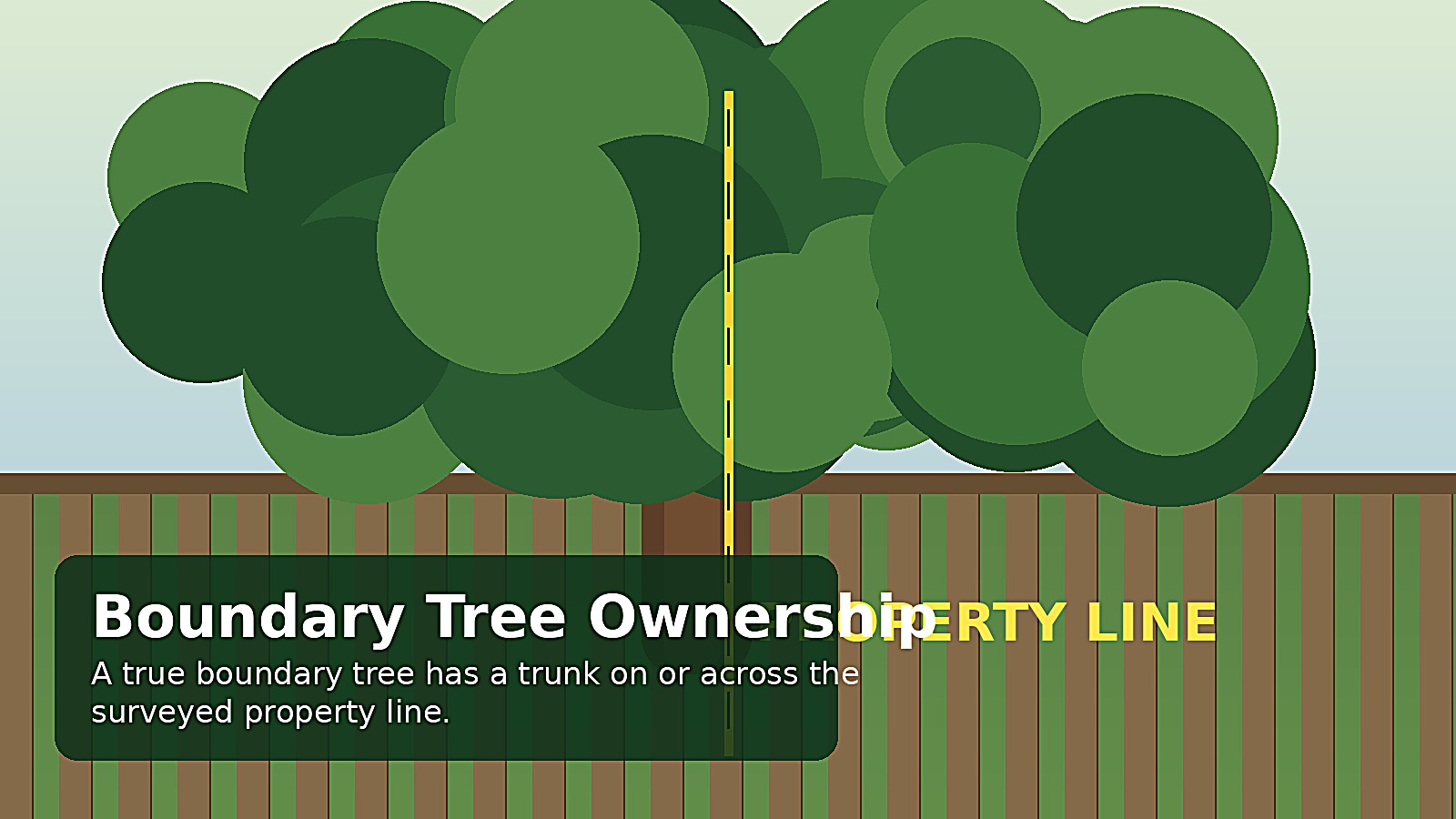
Boundary Trees
Ownership, consent, surveys, shared property rights, and neighbor disputes.
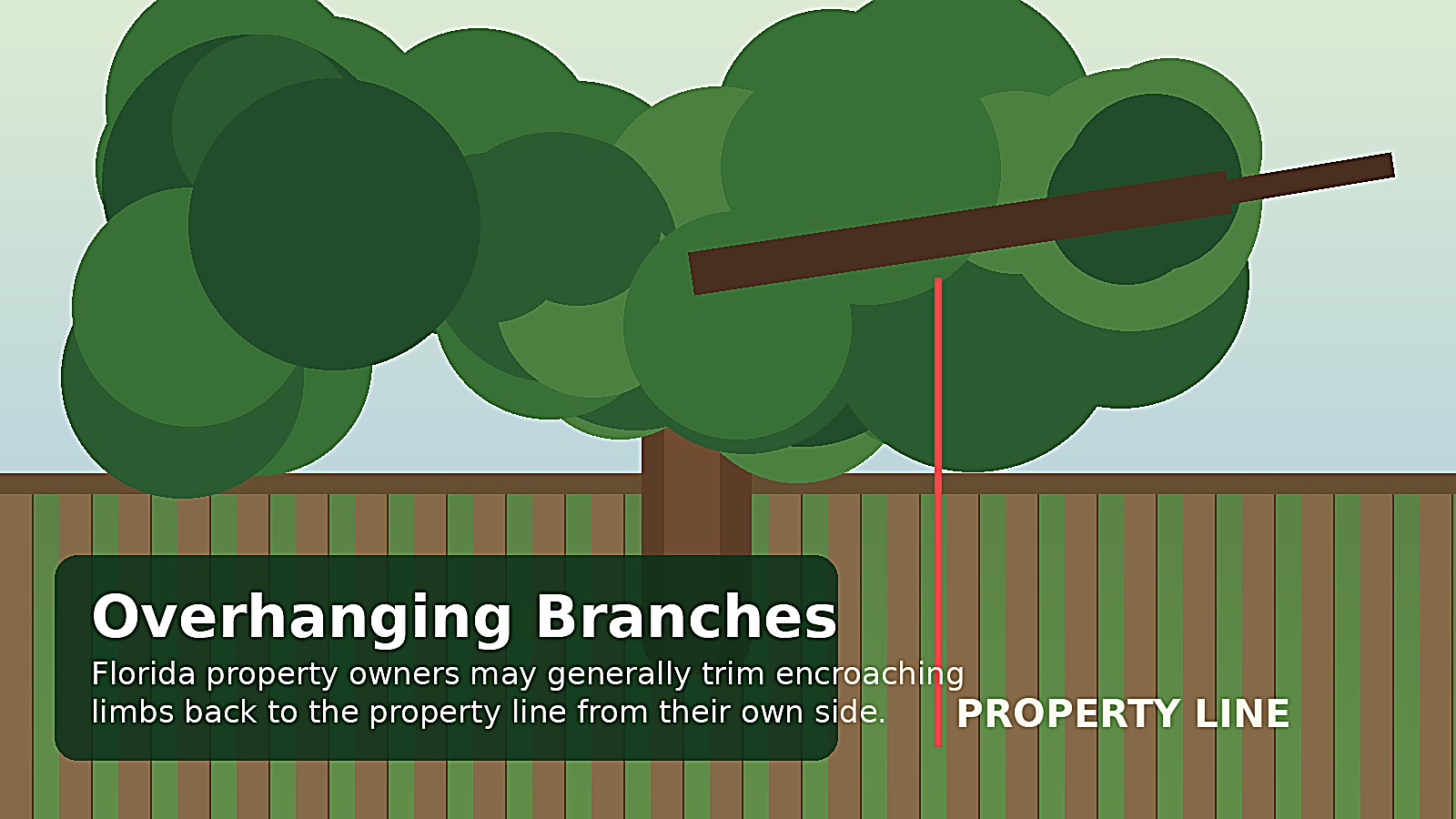
Overhanging Branches
Pruning rights, property line limits, and avoiding improper cuts that damage the tree.
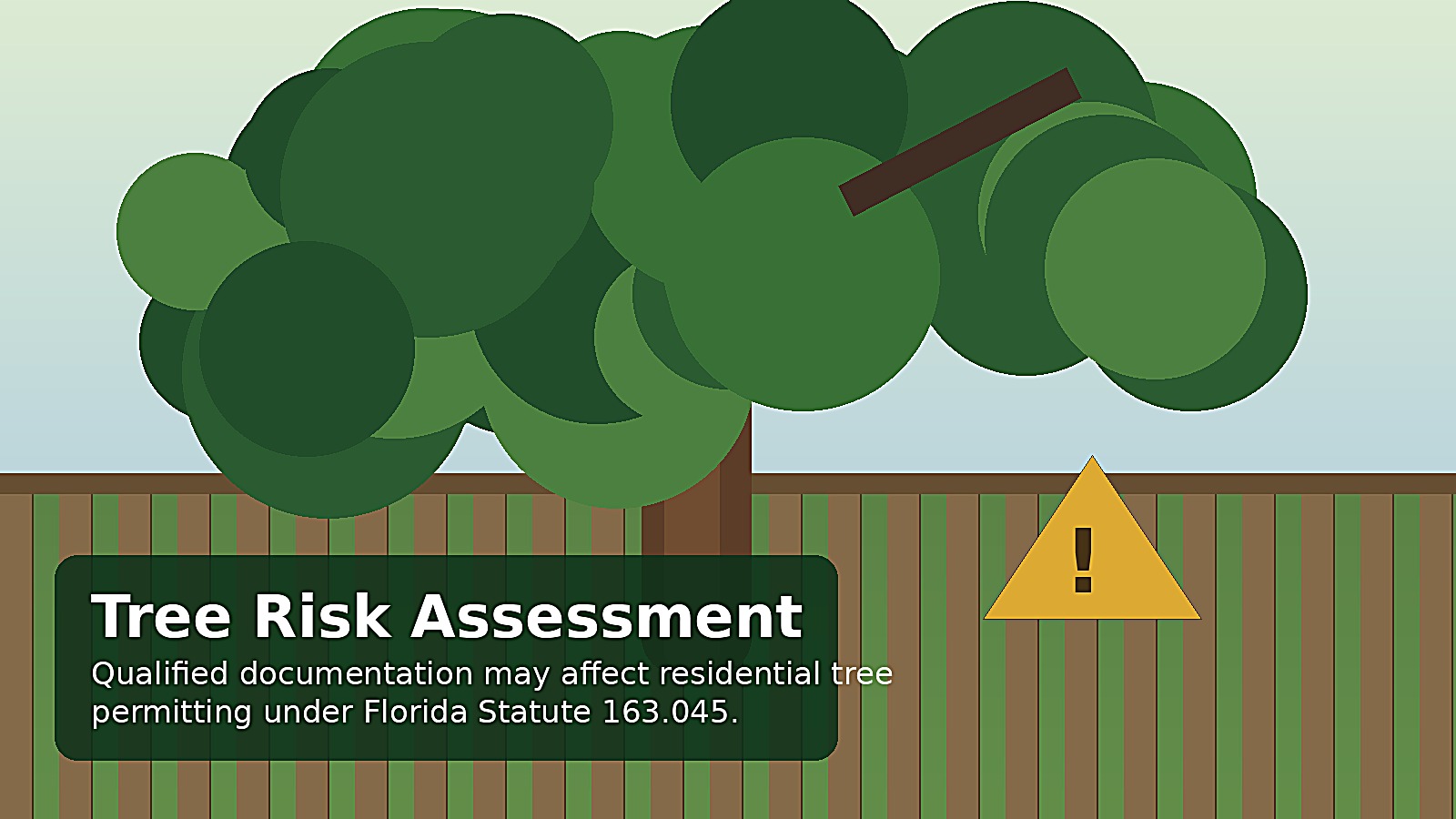
Tree Risk Assessments
Documentation for hazardous tree conditions and Florida Statute 163.045 questions.
What Is a Boundary Tree in Florida?
A boundary tree is a tree whose trunk is located directly on, across, or substantially intersecting the legal property line between adjoining properties. In practical terms, the critical question is usually not where the canopy extends, where the roots grow, or where most of the tree appears to lean. The key issue is the location of the trunk in relation to the surveyed property line. If the trunk crosses the property line, ownership and decision-making may become shared. That is why surveys, photographs, arborist observations, and site documentation are important before anyone authorizes removal or aggressive pruning.
Florida Boundary Tree Law and Common-Law Principles
Florida does not have one single statute titled "Boundary Tree Law." Boundary tree disputes are generally evaluated under common-law property principles, local ordinances, recorded restrictions, and case-specific facts. A tree standing entirely on one parcel is usually owned by that parcel owner. A true boundary tree may be treated differently because both adjoining owners may have an interest in the tree. Before removal, the safest approach is to verify the property line, document the tree, evaluate condition and risk, and obtain agreement or legal guidance where ownership is disputed.
Can I Remove Branches Hanging Over My Property?

In many Florida neighbor-tree situations, a property owner may generally prune branches that extend over the property line, but only from the owner's own side and generally only back to the property line. This self-help principle does not give a neighbor the right to enter another property without permission, remove the entire tree, or prune in a way that unnecessarily destroys or destabilizes the tree. Proper pruning should be performed in accordance with accepted arboricultural practices and should consider tree species, branch size, season, structure, and the likely impact on tree health and stability.
Can I Cut Roots Growing Onto My Property?
Root pruning is often more complicated than branch pruning because roots may be essential for structural support, water uptake, and tree health. Cutting roots near the trunk can destabilize a tree, create future failure risk, or contribute to decline. Root conflicts involving sidewalks, driveways, walls, pools, septic systems, water lines, sewer lines, gas lines, electric lines, and fiber optic utilities should be evaluated carefully. A consulting arborist can help determine whether mitigation, root pruning, pavement modification, root barriers, tree growth regulator use, or removal should be considered. Learn more about our Root Damage Investigation services.
Do I Need a Permit to Cut Down a Tree on Private Residential Property?

Florida Statute §163.045 is one of the most important statutes for private residential tree removal questions. In simplified terms, it limits a local government from requiring notice, application, approval, permit, fee, or mitigation for pruning, trimming, or removing a tree on residential property when the property owner possesses qualifying documentation from an ISA Certified Arborist or a Florida licensed landscape architect that the tree poses an unacceptable risk to persons or property. This should be documented properly and retained by the property owner.
Important Limits of Florida Statute 163.045

Florida Statute §163.045 should not be presented as a blanket right to remove any tree anywhere. It is directed to residential property and local government permitting or mitigation requirements. It does not automatically resolve boundary-tree ownership disputes, does not grant permission to trespass, does not eliminate private contract or deed-restriction issues, does not apply to every HOA or COA common-area situation, and does not apply to commercial property in the same manner. The statute also expressly does not apply to the delegated authority for mangrove protection under Florida law. A property owner should be careful before assuming the statute overrides every city, county, township, HOA, COA, conservation, easement, or private restriction.
Direct Statute Link for Website Visitors
Tap here to read the official Florida Legislature page for Florida Statute §163.045 - Tree pruning, trimming, or removal on residential property.
Important: this page should also explain that the statute does not automatically resolve private ownership disputes, HOA/COA common-area control, commercial-property permitting, mangrove protection, conservation restrictions, easements, or private governing documents.
Residential Lots vs. HOA / COA Common Ground

A privately owned residential lot is different from association-owned common property. If a tree is located on HOA or COA common ground, the association's governing documents, maintenance obligations, local ordinances, insurance requirements, and risk management duties may all matter. Florida Statute §163.045 is not a simple substitute for board authority, association procedure, or ownership analysis. In HOA or condominium disputes, the first questions should be: Who owns the land? Who controls the tree? What documents govern the association? Was the tree evaluated by a qualified professional? Were preservation or mitigation options considered?
Commercial Properties and Non-Residential Sites
Commercial properties, shopping centers, office parks, industrial sites, apartment communities, golf courses, municipal properties, and public rights-of-way may be subject to different permitting, zoning, conservation, landscape, and development requirements. A commercial property owner should not assume that the private residential provisions of Florida Statute §163.045 automatically apply. These sites often require a more detailed review of local code, site plans, landscape permits, conservation easements, development orders, and maintenance responsibilities.
Tree Risk Assessments and Qualified Documentation
A proper tree risk assessment is not just a short letter stating that a tree is dangerous. A stronger evaluation should identify the tree, location, species when possible, observed defects, site conditions, likelihood of failure, likelihood of impact, consequences, overall risk rating, and recommended mitigation. The assessment should be performed by a qualified professional using recognized tree risk assessment procedures. Photographs, measurements, site notes, and clear conclusions help protect property owners, associations, municipalities, and professionals. Review our Tree Risk Report service for more information.
Boundary Tree Removal and Neighbor Consent
If the trunk of a tree is on or across a shared property line, one owner should be very cautious about removing it without consent from the adjoining owner. Even if a tree appears inconvenient, messy, or expensive to maintain, ownership and property rights must be considered. If the tree is hazardous, the better approach is to document the condition, obtain a qualified assessment, notify affected parties, and seek an agreement or legal direction before removal.
Tree Damage, Negligence, and Liability
Tree-related liability frequently depends on notice, foreseeability, condition of the tree, standard of care, and whether reasonable action was taken. A healthy tree that fails during an extreme storm may be treated differently from a dead, decayed, or visibly hazardous tree that was ignored. Improper pruning, topping, root cutting, construction damage, soil compaction, grade changes, trenching, and irrigation changes can all become important evidence in a dispute.
Why Retain a Consulting Arborist?
A consulting arborist provides objective analysis rather than routine tree work. In disputed matters, the consulting arborist can evaluate ownership issues from a tree-location perspective, assess health and structural condition, document evidence, prepare reports, recommend mitigation, perform tree appraisals, and provide expert witness support. This is especially useful for attorneys, property managers, insurance professionals, HOAs, COAs, municipalities, and homeowners facing tree law or liability questions.
Florida Statute §163.045 - Website Explanation Box
Plain-language summary: Florida Statute §163.045 limits local governments from requiring notice, application, approval, permit, fee, or mitigation for pruning, trimming, or removing a tree on residential property when the property owner possesses qualifying documentation from an ISA Certified Arborist or Florida licensed landscape architect that the tree poses an unacceptable risk to persons or property.
Direct link: Official Florida Statute §163.045 page
| Situation | How to Explain It on the Website |
|---|---|
| Private residential property | Florida Statute §163.045 may limit local government permit, fee, mitigation, and replanting requirements when proper documentation exists. |
| Commercial property | Do not assume the residential statute applies. Review local code, development orders, landscape requirements, and permits. |
| HOA / COA common ground | Do not treat the statute as a blanket override. Determine ownership, governing documents, association authority, and maintenance duties. |
| Boundary tree | The statute does not decide ownership or consent issues when a tree trunk crosses a property line. |
| Mangroves | The statute expressly does not apply to specifically delegated mangrove protection authority. |
Attorney, HOA, COA, and Insurance Use Cases
Common Matters Evaluated
- Boundary tree ownership disputes
- Neighbor tree disputes and overhanging limb complaints
- Encroaching root damage to sidewalks, driveways, walls, foundations, pools, and utilities — see Root Damage Investigations
- Tree removal permit disputes — see Permitting, Compliance, and Violations
- Residential hazardous tree documentation — see Tree Risk Report
- HOA and condominium tree maintenance conflicts
- Tree appraisal and damage valuation — see Tree Appraisal Services
- Forensic arboriculture and expert witness matters — see Expert Witness Services
Documents Often Helpful
- Boundary survey or site plan
- Photographs and dates of condition changes
- Local tree ordinance correspondence
- HOA/COA governing documents and notices
- Arborist reports and tree risk assessments
- Tree service proposals and invoices
- Insurance letters, claim documents, and violation notices
Frequently Asked Questions
What is the main Florida statute for private residential tree removal?
Florida Statute §163.045, titled Tree pruning, trimming, or removal on residential property.
Does Florida Statute 163.045 eliminate all tree permits?
No. It limits local government permit, fee, notice, approval, mitigation, and replanting requirements only when the statute's residential-property and documentation requirements are met.
Can an ISA Certified Arborist help with Florida Statute 163.045?
Yes. The statute references documentation from an arborist certified by the International Society of Arboriculture or a Florida licensed landscape architect when the tree poses an unacceptable risk.
Does the statute apply to HOA or COA common property?
Do not assume that it does. Common areas require ownership, association authority, governing documents, and local requirements to be reviewed.
Does the statute apply to commercial property?
It is written for residential property and should not be treated as a general commercial-property exemption.
Can I cut branches hanging over my property?
Generally, you may prune encroaching branches back to the property line from your property, but pruning should be reasonable and should not unnecessarily damage the tree.
Can I cut roots crossing onto my property?
Root pruning may be possible, but it can destabilize or injure a tree. A consulting arborist should evaluate significant root conflicts before cutting.
Who owns a boundary tree?
If the trunk crosses the property line, the tree may be considered jointly owned or subject to shared rights. A survey and legal review may be needed.
Can my neighbor remove a boundary tree without me?
That can create a dispute and potential liability. Consent or legal direction is recommended before removing a true boundary tree.
Should I get an arborist report before removal?
Yes, especially when the tree is near a property line, involved in an HOA/COA dispute, believed to be hazardous, or subject to permitting questions.
Professional References and Useful Links
- Florida Statute §163.045 - Tree pruning, trimming, or removal on residential property
- Elowsky v. Gulf Power Co. search reference
- ISA tree risk assessment homeowner information
- ANSI A300 tree care standards information
- Tree Risk Report — Arborist Consulting Solutions
- Root Damage Investigations — Arborist Consulting Solutions
- Expert Witness Services — Arborist Consulting Solutions
- Tree Appraisal Services — Arborist Consulting Solutions